This is why protein intake for beginners should not be treated like an advanced detail.
It is one of the basics.
You do not need to know every macro perfectly to start making better choices.
You just need to make protein a priority more often.
Protein Helps With Muscle Growth
If you are training regularly, your body needs enough protein to recover and build.
That is why protein for muscle growth matters.
Workouts create the signal. Protein helps support the repair process. Recovery allows you to come back and train again.
Without enough protein, it becomes harder to support progress.
You may still train hard. You may still sweat. You may still feel sore.
But your body needs the right building blocks to actually recover from that work.
That is where daily protein habits come in.
Not one perfect meal.
Not one perfect shake.
Just repeated protein intake across the day.
Protein Can Support Fat Loss
A lot of people ask about protein for fat loss, but they usually think it means eating only chicken, cutting carbs, or following a strict diet.
It does not have to be that complicated.
Protein can support fat loss because it helps you feel fuller and makes meals more satisfying.
When your meals are low in protein, you may feel hungry again sooner.
That can lead to:
· More snacking · More cravings · Larger portions later · Less control at night · A harder time staying consistent
Protein does not magically burn fat by itself.
But it can make your nutrition easier to manage.
And when your meals are easier to manage, consistency improves.
That is what drives results over time.
How Much Protein Do I Need?
A common question is: how much protein do I need?
The answer depends on your body, training, goals, and total food intake.
But you do not need to start with perfect numbers.
Start with a simple baseline:
Get protein in every meal.
That could mean:
· Eggs at breakfast · Greek yogurt as a snack · Chicken, beef, fish, or turkey at lunch · Cottage cheese or protein oats · A protein shake when you are busy · Lean protein with dinner
This simple approach works because it creates structure.
If you are new to this, do not stress over perfect grams on day one.
Focus on building the habit first.
Protein intake for beginners should feel doable, not overwhelming.
Make Protein Easy to Repeat
The best nutrition plan is the one you can actually repeat.
That is why daily protein habits matter more than complicated macro plans.
Ask yourself:
· Do I have protein at breakfast? · Do I have a quick protein option when I am busy? · Do I have enough protein after training? · Do my meals keep me full? · Am I consistent on weekends?
If the answer is no, start small.
You do not need to rebuild your whole diet.
You can simply add protein to the meals you already eat.
For example:
· Add Greek yogurt to breakfast · Add eggs to toast · Add chicken to a wrap · Add protein powder to oats · Add a protein shake after training · Add lean protein to a salad or bowl
Simple wins add up.
Where Protein Shakes Fit
Protein shakes are not magic.
But they are useful.
One of the biggest protein shake benefits is convenience.
Some days, cooking is not realistic.
You may be busy. You may be traveling. You may finish a workout and need something quick. You may not feel like eating a full meal right away.
That is where a shake can help.
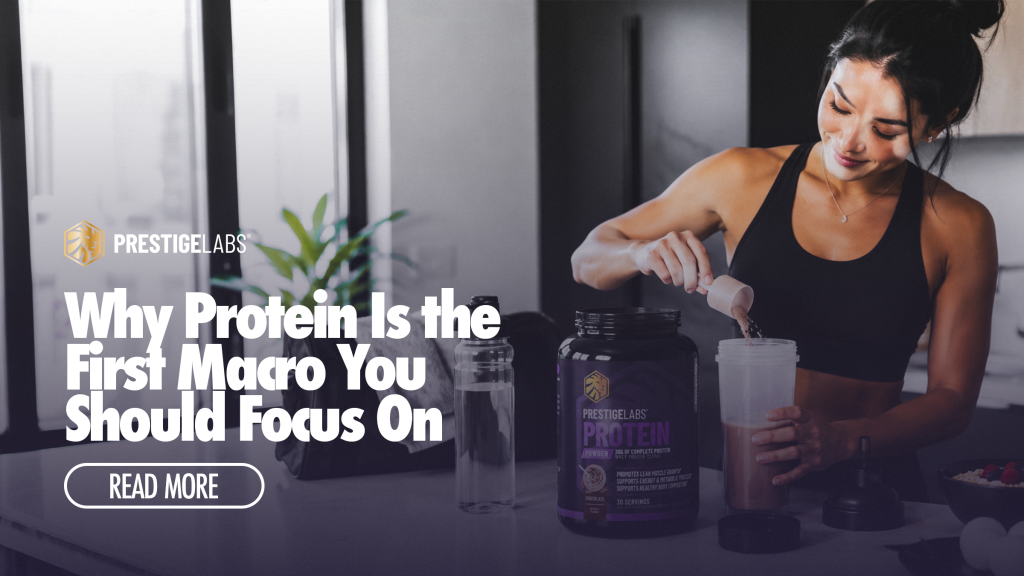
Prestige Protein can make it easier to support your daily protein intake without overthinking another meal.
It is not about replacing real food.
It is about making consistency easier.
Because if the plan only works when your schedule is perfect, it is not a realistic plan.
Protein and Recovery
Training is only part of progress.
Recovery is the other part.
Muscle recovery nutrition matters because your body needs enough fuel and nutrients to adapt from training.
Protein plays a key role in that process.
If you are working out but constantly under-eating protein, recovery may feel harder than it needs to.
You may notice:
· More soreness · Slower progress · Low energy · Poor workout performance · Trouble staying consistent
Protein does not fix everything.
You still need sleep, hydration, and a good training plan.
But if recovery is the goal, protein should be part of the foundation.
Do Not Overcomplicate Macros Too Soon
Calories matter.
Carbs matter.
Fats matter.
But if you try to perfect everything at once, nutrition can start to feel like a full-time job.
That is where people get overwhelmed.
They start tracking everything for a week.
Then life gets busy.
Then they stop.
Instead, start with the simplest anchor:
Protein first.
Once your protein habits are more consistent, the rest becomes easier to adjust.
This is one of the most useful simple nutrition tips because it removes pressure.
You are not trying to be perfect.
You are trying to build a base.
A Simple Protein-First Day
You do not need a complicated meal plan.
A simple protein-first day might look like this:
· Breakfast: eggs, Greek yogurt, protein oats, or a smoothie · Lunch: chicken, turkey, beef, fish, tofu, or a high-protein bowl · Snack: cottage cheese, Greek yogurt, jerky, or a protein shake · Dinner: lean protein with rice, potatoes, vegetables, or salad
Nothing extreme.
Nothing fancy.
Just protein showing up consistently.
That is the point.
The Takeaway
If you are wondering why protein is important, keep it simple.
Protein supports muscle growth. Protein supports recovery. Protein can help with fullness. Protein can make fat loss easier to manage. Protein helps create structure when nutrition feels confusing.
You do not need to master every macro on day one.
Start with protein.
Build daily protein habits. Use quick options when needed. Keep your meals simple. Stay consistent.
This is why protein intake for beginners should not be treated like an advanced detail.
It is one of the basics.
You do not need to know every macro perfectly to start making better choices.
You just need to make protein a priority more often.
Protein Helps With Muscle Growth
If you are training regularly, your body needs enough protein to recover and build.
That is why protein for muscle growth matters.
Workouts create the signal. Protein helps support the repair process. Recovery allows you to come back and train again.
Without enough protein, it becomes harder to support progress.
You may still train hard. You may still sweat. You may still feel sore.
But your body needs the right building blocks to actually recover from that work.
That is where daily protein habits come in.
Not one perfect meal.
Not one perfect shake.
Just repeated protein intake across the day.
Protein Can Support Fat Loss
A lot of people ask about protein for fat loss, but they usually think it means eating only chicken, cutting carbs, or following a strict diet.
It does not have to be that complicated.
Protein can support fat loss because it helps you feel fuller and makes meals more satisfying.
When your meals are low in protein, you may feel hungry again sooner.
That can lead to:
· More snacking · More cravings · Larger portions later · Less control at night · A harder time staying consistent
Protein does not magically burn fat by itself.
But it can make your nutrition easier to manage.
And when your meals are easier to manage, consistency improves.
That is what drives results over time.
How Much Protein Do I Need?
A common question is: how much protein do I need?
The answer depends on your body, training, goals, and total food intake.
But you do not need to start with perfect numbers.
Start with a simple baseline:
Get protein in every meal.
That could mean:
· Eggs at breakfast · Greek yogurt as a snack · Chicken, beef, fish, or turkey at lunch · Cottage cheese or protein oats · A protein shake when you are busy · Lean protein with dinner
This simple approach works because it creates structure.
If you are new to this, do not stress over perfect grams on day one.
Focus on building the habit first.
Protein intake for beginners should feel doable, not overwhelming.
Make Protein Easy to Repeat
The best nutrition plan is the one you can actually repeat.
That is why daily protein habits matter more than complicated macro plans.
Ask yourself:
· Do I have protein at breakfast? · Do I have a quick protein option when I am busy? · Do I have enough protein after training? · Do my meals keep me full? · Am I consistent on weekends?
If the answer is no, start small.
You do not need to rebuild your whole diet.
You can simply add protein to the meals you already eat.
For example:
· Add Greek yogurt to breakfast · Add eggs to toast · Add chicken to a wrap · Add protein powder to oats · Add a protein shake after training · Add lean protein to a salad or bowl
Simple wins add up.
Where Protein Shakes Fit
Protein shakes are not magic.
But they are useful.
One of the biggest protein shake benefits is convenience.
Some days, cooking is not realistic.
You may be busy. You may be traveling. You may finish a workout and need something quick. You may not feel like eating a full meal right away.
That is where a shake can help.
Prestige Protein can make it easier to support your daily protein intake without overthinking another meal.
It is not about replacing real food.
It is about making consistency easier.
Because if the plan only works when your schedule is perfect, it is not a realistic plan.
Protein and Recovery
Training is only part of progress.
Recovery is the other part.
Muscle recovery nutrition matters because your body needs enough fuel and nutrients to adapt from training.
Protein plays a key role in that process.
If you are working out but constantly under-eating protein, recovery may feel harder than it needs to.
You may notice:
· More soreness · Slower progress · Low energy · Poor workout performance · Trouble staying consistent
Protein does not fix everything.
You still need sleep, hydration, and a good training plan.
But if recovery is the goal, protein should be part of the foundation.
Do Not Overcomplicate Macros Too Soon
Calories matter.
Carbs matter.
Fats matter.
But if you try to perfect everything at once, nutrition can start to feel like a full-time job.
That is where people get overwhelmed.
They start tracking everything for a week.
Then life gets busy.
Then they stop.
Instead, start with the simplest anchor:
Protein first.
Once your protein habits are more consistent, the rest becomes easier to adjust.
This is one of the most useful simple nutrition tips because it removes pressure.
You are not trying to be perfect.
You are trying to build a base.
A Simple Protein-First Day
You do not need a complicated meal plan.
A simple protein-first day might look like this:
· Breakfast: eggs, Greek yogurt, protein oats, or a smoothie · Lunch: chicken, turkey, beef, fish, tofu, or a high-protein bowl · Snack: cottage cheese, Greek yogurt, jerky, or a protein shake · Dinner: lean protein with rice, potatoes, vegetables, or salad
Nothing extreme.
Nothing fancy.
Just protein showing up consistently.
That is the point.
The Takeaway
If you are wondering why protein is important, keep it simple.
Protein supports muscle growth. Protein supports recovery. Protein can help with fullness. Protein can make fat loss easier to manage. Protein helps create structure when nutrition feels confusing.
You do not need to master every macro on day one.
Start with protein.
Build daily protein habits. Use quick options when needed. Keep your meals simple. Stay consistent.




Leave a Reply