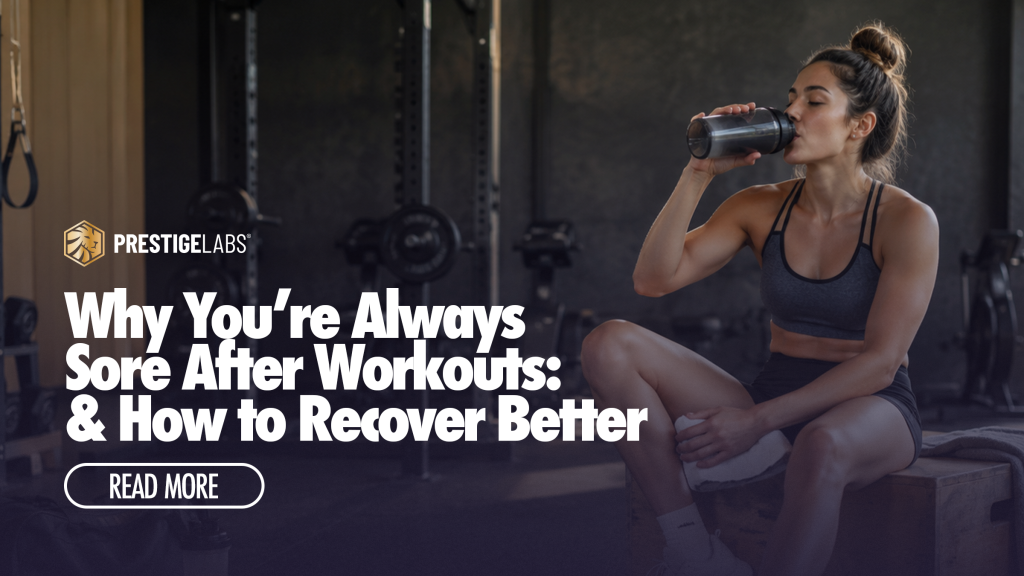
Constant soreness can slow your progress. Learn why you’re always sore and how to support better recovery with simple habits.
Soreness can feel like proof that you worked hard.
You trained. You pushed. You felt it the next day.
But being sore all the time is not always a good sign.
If you keep asking, “Why am I always sore after workouts?” the answer might not be that your workouts are amazing.
It might mean your recovery is falling behind.
Muscle soreness recovery matters because progress does not happen only from training hard.
Progress happens when you train, recover, and come back ready to perform again.
If you are constantly sore, tired, stiff, and dragging through workouts, your body might be telling you something.
Soreness Is Not the Goal
A lot of people chase soreness.
They think:
· More soreness means more progress · If they are not sore, the workout did not work · Every session has to feel brutal · Pain means they are building muscle
But soreness is not the goal.
Progress is the goal.
You can have a great workout and not feel sore the next day.
You can also feel extremely sore from a workout that was too much, too random, or poorly recovered from.
That is why beginner gym soreness can be confusing.
When you first start training, soreness is normal. Your body is adapting to new movement, new stress, and new intensity.
But if soreness never improves, it is time to look at your recovery habits.
You Might Be Doing Too Much Too Soon
One common reason for constant soreness is too much intensity too quickly.
This happens when someone:
· Starts training 5–6 days per week right away · Adds too many new exercises · Pushes every set to failure · Changes workouts constantly · Skips rest days · Does heavy lifting and hard cardio without enough recovery
More is not always better.
Better is better.
If your body is always sore, your plan may need more structure.
A simple training routine that progresses gradually will usually work better than random hard workouts that leave you crushed every week.
If you want to know how to recover faster from workouts, sometimes the first answer is not adding more recovery supplements.
Sometimes it is managing the training load better.
Low Protein Can Slow Recovery
Protein for recovery matters because your muscles need support after training.
When you work out, your body goes through stress. Recovery is the process of repairing, rebuilding, and adapting from that stress.
If you are training hard but not eating enough protein, muscle soreness recovery can feel harder than it needs to.
You may notice:
· Soreness lasting longer · Low energy during workouts · Trouble building strength · More cravings · Poor consistency
This does not mean you need a perfect diet.
It means protein should show up consistently.
Simple protein options include:
· Eggs · Greek yogurt · Lean meat · Fish · Cottage cheese · Protein oats · Protein smoothies · A quick shake when you are busy
Prestige Protein can help make protein intake easier, especially after training or on days when cooking is not realistic.
It is not about replacing real food.
It is about making recovery habits easier to repeat.
Poor Hydration Makes Everything Feel Harder
Hydration is one of the most overlooked workout recovery tips.
When you are not hydrated, your workouts can feel harder. Your energy can drop. Your muscles may feel tighter. Recovery may feel slower.
That is why intra workout hydration matters, especially if you train hard, sweat a lot, or work out in a hot environment.
Good hydration habits include:
· Drinking water before training · Sipping fluids during workouts · Rehydrating after training · Paying attention to sweat loss · Using electrolytes when needed
Prestige Intra Workout can help support hydration and endurance during training, especially when plain water is not enough to keep you feeling consistent.
Again, the goal is simple.
Support the basics.
Train well. Hydrate well. Recover well. Repeat.
Sleep Might Be the Missing Piece
You can have the best workout plan and solid nutrition.
But if your sleep is poor, recovery will suffer.
Sleep and muscle recovery go together.
Your body needs rest to repair, adapt, and prepare for the next workout.
If you are not sleeping enough, soreness may stick around longer than expected.
Poor sleep can also affect:
· Workout performance · Motivation · Hunger and cravings · Stress levels · Energy · Consistency
A few simple sleep habits can help:
· Keep a consistent bedtime when possible · Avoid caffeine too late in the day · Reduce late-night scrolling · Keep your room cool and dark · Give your body enough time to wind down
Prestige Sleep can help support your nighttime routine when rest is the missing piece.
But the foundation still matters.
You cannot out-supplement poor sleep habits forever.
Your Workouts Might Be Too Random
Random workouts often create random soreness.
One week, you hit heavy legs. Next week, a high-volume circuit. Then a new class. Then a new machine. Then a new challenge.
Your body is constantly being exposed to different stress without enough consistency to adapt.
That can make soreness feel like progress.
But really, your body might just be reacting to too much novelty.
A better approach:
· Keep the same core workouts for several weeks · Progress slowly · Track weights and reps · Add intensity gradually · Give sore muscle groups time to recover · Avoid changing everything every week
If your goal is progress, your workouts need enough repetition for your body to improve.
Not just enough variety to keep you sore.
How to Recover Faster From Workouts
If you want to know how to recover faster from workouts, start with the basics.
You do not need a complicated recovery plan.
Start here:
· Eat enough protein · Hydrate before, during, and after training · Sleep consistently · Take rest days seriously · Walk or move lightly on recovery days · Progress gradually instead of doing too much too soon · Keep your workout routine consistent enough to adapt
These are the recovery habits that actually support long-term progress.
Recovery does not mean doing nothing.
It means giving your body what it needs so you can train again with quality.
Where Recovery Supplements Fit
Recovery supplements are not the foundation.
They are support.
Used properly, they can help make the basics easier.
For example:
· Prestige Protein can help support daily protein intake and muscle recovery nutrition · Prestige Intra Workout can help support hydration and endurance during training · Prestige Sleep can help support better sleep routines and recovery quality
Supplements work best when they are attached to simple habits.
Not when they are used to cover up poor recovery patterns.
If soreness is the problem, look at the full picture:
Training. Protein. Hydration. Sleep. Consistency.
That is where progress gets easier to maintain.
The Takeaway
Soreness is normal sometimes.
But being sore all the time is not the goal.
If you keep wondering, “Why am I always sore after workouts?” look at your recovery first.
You may need:
· More protein · Better hydration · More sleep · Smarter training · Better workout consistency · More realistic intensity
A good workout should challenge you.
But it should not leave you constantly run down.
Train hard.
Recover harder.
That is how you make progress you can actually repeat.
Constant soreness can slow your progress. Learn why you’re always sore and how to support better recovery with simple habits.
Soreness can feel like proof that you worked hard.
You trained. You pushed. You felt it the next day.
But being sore all the time is not always a good sign.
If you keep asking, “Why am I always sore after workouts?” the answer might not be that your workouts are amazing.
It might mean your recovery is falling behind.
Muscle soreness recovery matters because progress does not happen only from training hard.
Progress happens when you train, recover, and come back ready to perform again.
If you are constantly sore, tired, stiff, and dragging through workouts, your body might be telling you something.
Soreness Is Not the Goal
A lot of people chase soreness.
They think:
· More soreness means more progress · If they are not sore, the workout did not work · Every session has to feel brutal · Pain means they are building muscle
But soreness is not the goal.
Progress is the goal.
You can have a great workout and not feel sore the next day.
You can also feel extremely sore from a workout that was too much, too random, or poorly recovered from.
That is why beginner gym soreness can be confusing.
When you first start training, soreness is normal. Your body is adapting to new movement, new stress, and new intensity.
But if soreness never improves, it is time to look at your recovery habits.
You Might Be Doing Too Much Too Soon
One common reason for constant soreness is too much intensity too quickly.
This happens when someone:
· Starts training 5–6 days per week right away · Adds too many new exercises · Pushes every set to failure · Changes workouts constantly · Skips rest days · Does heavy lifting and hard cardio without enough recovery
More is not always better.
Better is better.
If your body is always sore, your plan may need more structure.
A simple training routine that progresses gradually will usually work better than random hard workouts that leave you crushed every week.
If you want to know how to recover faster from workouts, sometimes the first answer is not adding more recovery supplements.
Sometimes it is managing the training load better.
Low Protein Can Slow Recovery
Protein for recovery matters because your muscles need support after training.
When you work out, your body goes through stress. Recovery is the process of repairing, rebuilding, and adapting from that stress.
If you are training hard but not eating enough protein, muscle soreness recovery can feel harder than it needs to.
You may notice:
· Soreness lasting longer · Low energy during workouts · Trouble building strength · More cravings · Poor consistency
This does not mean you need a perfect diet.
It means protein should show up consistently.
Simple protein options include:
· Eggs · Greek yogurt · Lean meat · Fish · Cottage cheese · Protein oats · Protein smoothies · A quick shake when you are busy
Prestige Protein can help make protein intake easier, especially after training or on days when cooking is not realistic.
It is not about replacing real food.
It is about making recovery habits easier to repeat.
Poor Hydration Makes Everything Feel Harder
Hydration is one of the most overlooked workout recovery tips.
When you are not hydrated, your workouts can feel harder. Your energy can drop. Your muscles may feel tighter. Recovery may feel slower.
That is why intra workout hydration matters, especially if you train hard, sweat a lot, or work out in a hot environment.
Good hydration habits include:
· Drinking water before training · Sipping fluids during workouts · Rehydrating after training · Paying attention to sweat loss · Using electrolytes when needed
Prestige Intra Workout can help support hydration and endurance during training, especially when plain water is not enough to keep you feeling consistent.
Again, the goal is simple.
Support the basics.
Train well. Hydrate well. Recover well. Repeat.
Sleep Might Be the Missing Piece
You can have the best workout plan and solid nutrition.
But if your sleep is poor, recovery will suffer.
Sleep and muscle recovery go together.
Your body needs rest to repair, adapt, and prepare for the next workout.
If you are not sleeping enough, soreness may stick around longer than expected.
Poor sleep can also affect:
· Workout performance · Motivation · Hunger and cravings · Stress levels · Energy · Consistency
A few simple sleep habits can help:
· Keep a consistent bedtime when possible · Avoid caffeine too late in the day · Reduce late-night scrolling · Keep your room cool and dark · Give your body enough time to wind down
Prestige Sleep can help support your nighttime routine when rest is the missing piece.
But the foundation still matters.
You cannot out-supplement poor sleep habits forever.
Your Workouts Might Be Too Random
Random workouts often create random soreness.
One week, you hit heavy legs. Next week, a high-volume circuit. Then a new class. Then a new machine. Then a new challenge.
Your body is constantly being exposed to different stress without enough consistency to adapt.
That can make soreness feel like progress.
But really, your body might just be reacting to too much novelty.
A better approach:
· Keep the same core workouts for several weeks · Progress slowly · Track weights and reps · Add intensity gradually · Give sore muscle groups time to recover · Avoid changing everything every week
If your goal is progress, your workouts need enough repetition for your body to improve.
Not just enough variety to keep you sore.
How to Recover Faster From Workouts
If you want to know how to recover faster from workouts, start with the basics.
You do not need a complicated recovery plan.
Start here:
· Eat enough protein · Hydrate before, during, and after training · Sleep consistently · Take rest days seriously · Walk or move lightly on recovery days · Progress gradually instead of doing too much too soon · Keep your workout routine consistent enough to adapt
These are the recovery habits that actually support long-term progress.
Recovery does not mean doing nothing.
It means giving your body what it needs so you can train again with quality.
Where Recovery Supplements Fit
Recovery supplements are not the foundation.
They are support.
Used properly, they can help make the basics easier.
For example:
· Prestige Protein can help support daily protein intake and muscle recovery nutrition · Prestige Intra Workout can help support hydration and endurance during training · Prestige Sleep can help support better sleep routines and recovery quality
Supplements work best when they are attached to simple habits.
Not when they are used to cover up poor recovery patterns.
If soreness is the problem, look at the full picture:
Training. Protein. Hydration. Sleep. Consistency.
That is where progress gets easier to maintain.
The Takeaway
Soreness is normal sometimes.
But being sore all the time is not the goal.
If you keep wondering, “Why am I always sore after workouts?” look at your recovery first.
You may need:
· More protein · Better hydration · More sleep · Smarter training · Better workout consistency · More realistic intensity
A good workout should challenge you.
But it should not leave you constantly run down.
Train hard.
Recover harder.
That is how you make progress you can actually repeat.




Leave a Reply